
Coding, Robotics or LEGO? Choosing a Kids’ Tech Class Near Mega Bangna
Compare coding, robotics and LEGO-based STEM classes near Mega Bangna by what children build, how they learn and what parents should ask first.
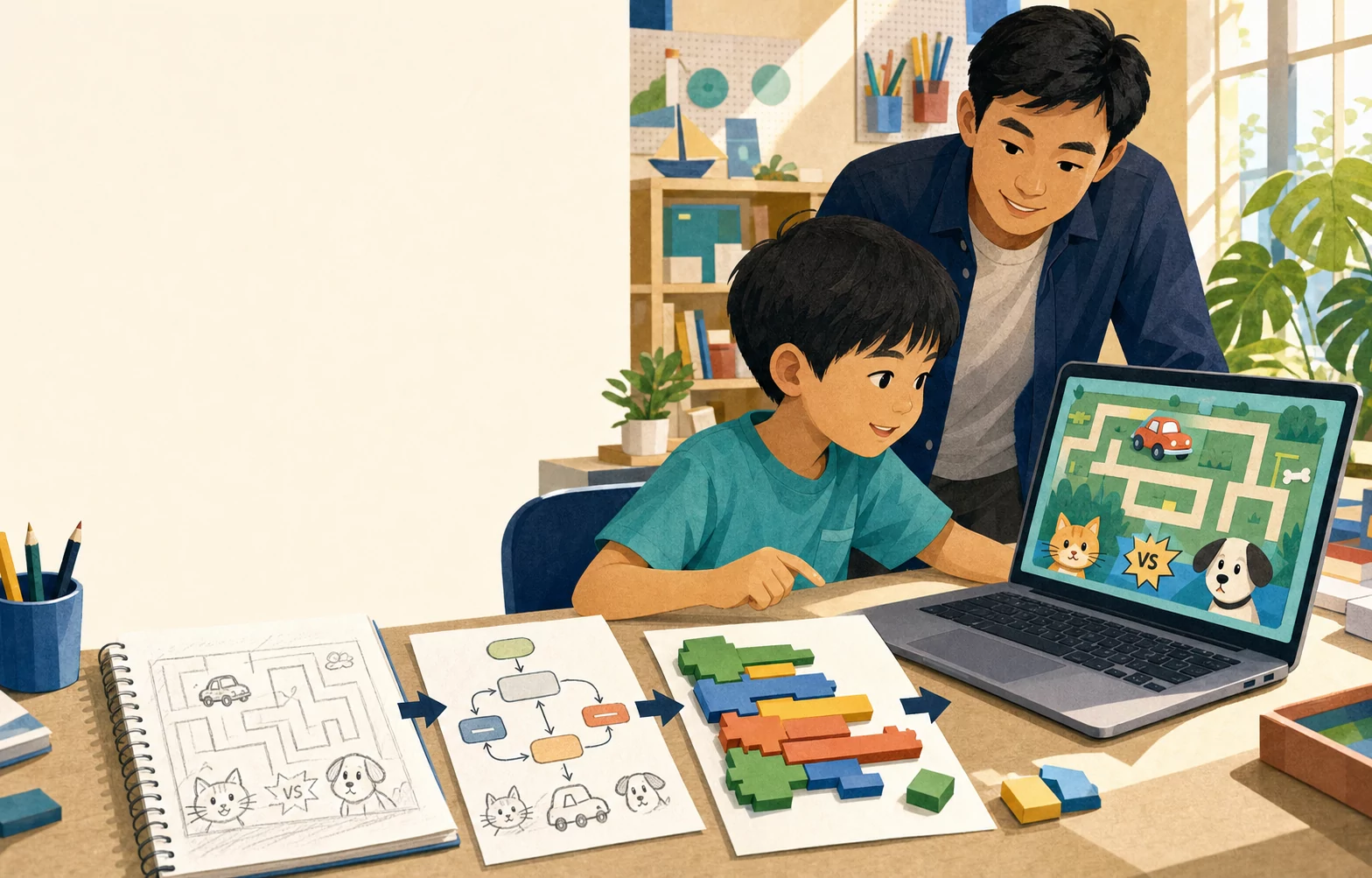
A child who loves LEGO may not enjoy sitting at a laptop. Another may care less about the machine on the table than the game taking shape on the screen. “Technology class” covers both children, but it does not describe the same experience.
Around Mega Bangna, families can choose from LEGO-based STEM classes, robotics and engineering programs, mathematics-and-coding centers, and software courses. The useful question is not which label sounds most advanced. It is what the child will actually spend the lesson doing.
LEGO-based STEM: start with something children can touch
LEGO programs make ideas visible quickly. Children follow or adapt a model, connect moving parts and see what changes when a piece is moved. This can suit younger builders who enjoy working with their hands and need a concrete result before they are ready to think about code on its own.
Bricks 4 Kidz at Mega Bangna describes its program as STEM learning through LEGO, with an emphasis on systematic thinking, curiosity and creativity. That is a clearer fit for a child excited by construction than for one whose main goal is to make an original browser game.
Ask whether the session is mainly guided assembly, open-ended invention or a mixture. Those are different learning experiences even when they use the same bricks.
Robotics: connect instructions to a physical machine
Robotics adds motors, sensors and programmed behavior. A child is not only deciding what an object should look like, but what it should detect and do. This makes abstract instructions easier to discuss: if the robot does not stop, turn or respond, the problem is visible.
Robot’s Child has advertised robotics, programming, mathematics and engineering courses at Mega Bangna. Math Talent also describes a wider mix of mathematics, science and coding taught through activities, experiments, games and learning materials.
These programs may be a strong match for children who ask how machines work. Parents should check how much time is spent building, programming and troubleshooting. A robotics class can contain all three, but the balance matters.
Coding: build the rules behind the experience
Software-focused coding moves the work onto a screen. Children plan controls, decisions, scores, screens and feedback. The result might be a small game, animation or application rather than a physical robot.
This route tends to suit children who enjoy inventing rules, stories or digital experiences. It also exposes a difficult but useful part of making software: several correct-looking pieces still have to work together.
At Siamese Cat Creative Club, the 12-lesson Coding with AI course is built around that complete process. Children move from goals, inputs and conditions to loops, variables, functions, interface planning, AI instructions, testing and presenting a first game or mini app. AI can help produce a draft, but the student still has to define the problem and judge whether the result works.
Four questions are more useful than a course label
Before booking, ask:
- What will my child make or demonstrate?
- How much of the work is copied, adapted or designed independently?
- What happens when the first attempt fails?
- Is the class matched by age, current skill or individual readiness?
A polished project is not the only sign of a worthwhile class. The more revealing moment is often the repair: can the child explain what went wrong, try a smaller change and test again?
Choose LEGO when hands-on construction is the attraction. Choose robotics when machines and sensors hold the child’s attention. Choose software coding when the child wants to design the rules and experience itself. If the answer is not obvious, a real trial task will tell you more than another brochure.