
Creative Activities for Children Who Don’t Enjoy Structured Classes
A child can enjoy drawing, clay and building without being ready for a formal class. Start with choice, shorter visits and manageable materials.
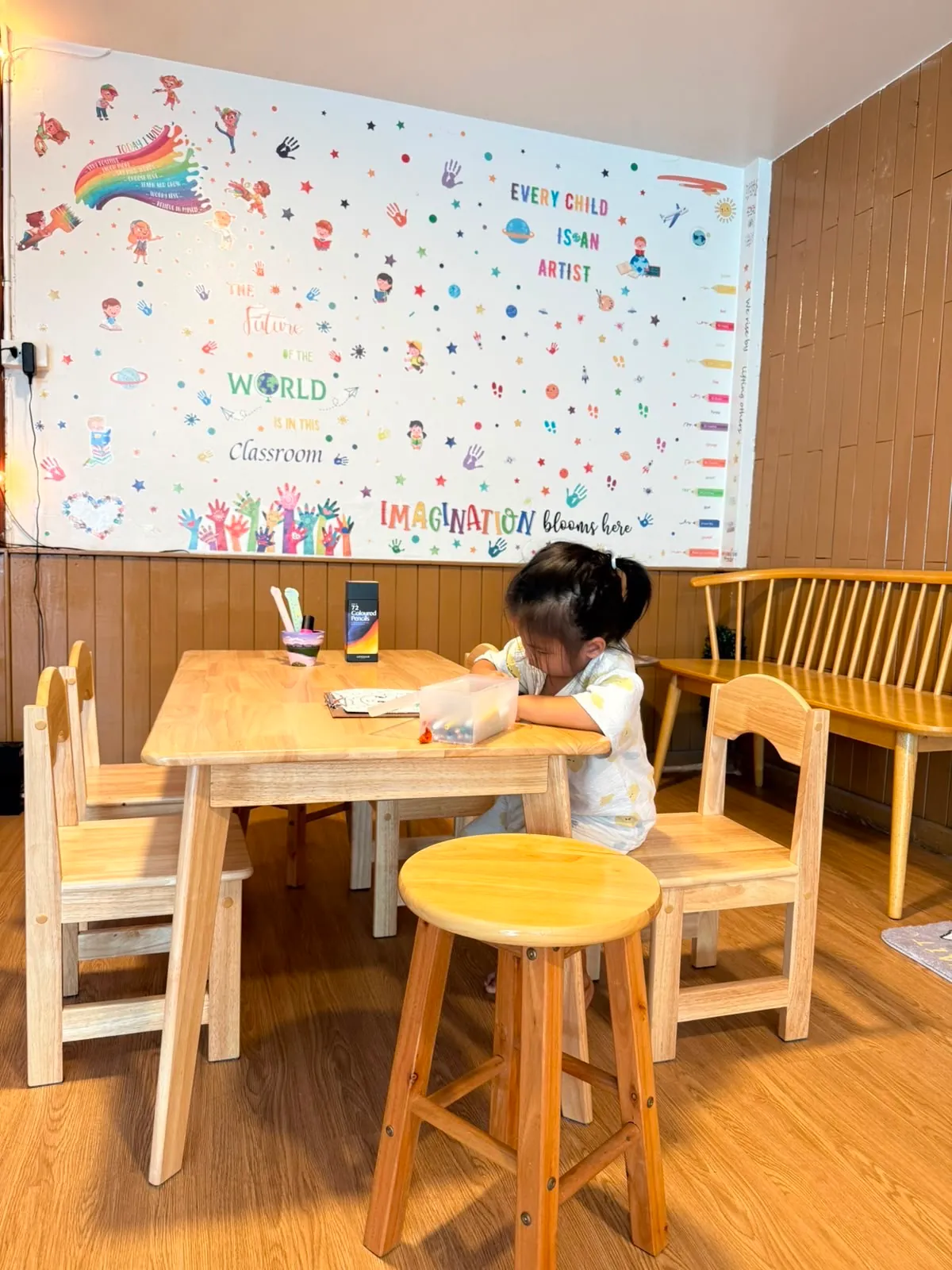
A child can love drawing and still dislike art class. They may spend forty minutes inventing a cardboard creature at home, then refuse to copy the teacher’s example for ten.
That does not automatically mean the child lacks concentration or interest. The difficulty may be the structure around the activity: the pace is fixed, the outcome has already been chosen, or the child must wait through instructions before touching the material.
If your child resists formal classes, the next step does not have to be abandoning creative activities. Change the format first.
Begin with a material, not a promised result
“Today we are making a perfect clay rabbit” creates a success condition before the child begins. “Would you like to make something small with blue or yellow clay?” gives enough direction to start without deciding the entire piece.
Some children work better when they can handle the material and discover the idea afterward. This is particularly useful during a first visit, when the adult does not yet know whether the child will stay with clay, coloring or building.
Keep the available choices modest. An entire cupboard can create more hesitation than freedom.
Shorter sessions produce better information
Parents sometimes book a long class because it appears to offer better value. For a child unsure about the setting, duration can become the main challenge.
A shorter visit answers practical questions: Will the child enter the room? What material do they approach? Do they want an adult beside them? Do they stop because the task is difficult, or because they are simply finished?
Leaving after a successful hour can be more useful than stretching an activity until the child asks never to return.
Separate guidance from control
Guidance can make an activity possible. An adult might show how to soften clay, keep a crayon rubbing from moving or connect two pieces securely. Control begins when every color, shape and correction belongs to the adult.
Try helping at the point of friction rather than directing the entire project. If the child asks how to attach a head, demonstrate one method on a spare piece. Let them decide whether to use it.
The finished object may look less polished. It will reveal more about the child’s decisions.
Let play and making share the same visit
Some children concentrate more comfortably when they can move away and return. A format that combines indoor play with optional creative activities can suit them better than a lesson where everyone begins and ends together.
Siamese Cat Creative Club’s Kids Playroom uses this flexible model. Each child entry includes indoor play and one coloring sheet. A separate staff-guided crayon activity is 45 THB, while small and large soft-clay figure activities are 69 THB and 99 THB. The parent or guardian stays on the premises and remains responsible for the child.
This is not a substitute for a progressive art curriculum. A specialist class is the stronger choice when a child wants to develop technique over time. The Playroom offers a lower-commitment way to find out which materials invite attention before making that decision.
Watch what the child returns to
Do not judge the visit only by the finished page or figure. Notice what happens after interruption. Does the child come back to add something? Do they explain a choice? Do they ask to keep the piece or try another version?
A child who dislikes structured classes may still be ready for meaningful creative work. Start with a manageable amount of time, a real choice and an adult who can help without taking over. Structure can be added later, once there is something the child wants to pursue.