
Does a Five-Year-Old Need More Lessons Before School?
Build school readiness through stories, play and small everyday responsibilities without turning home into another classroom.
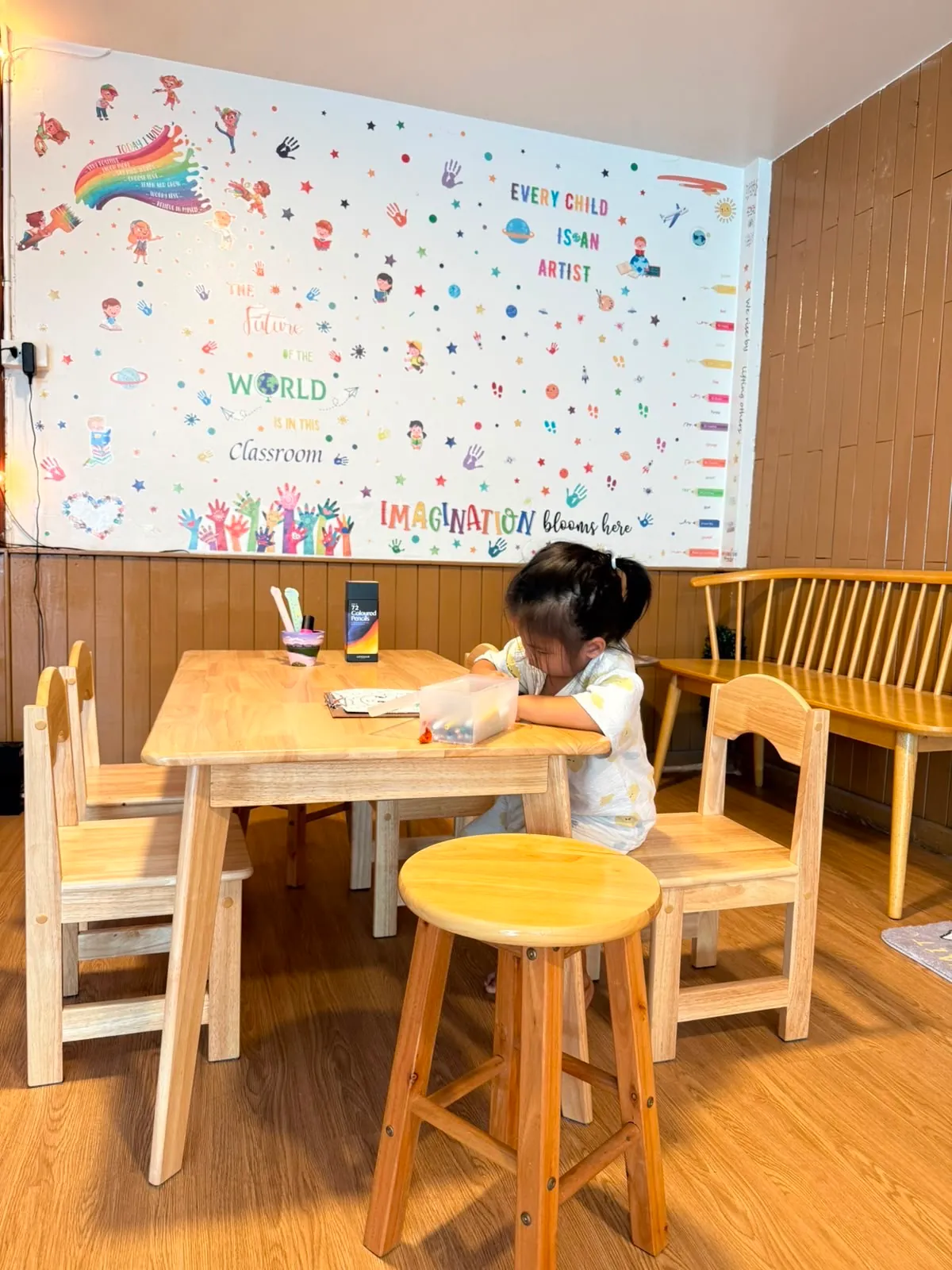
The useful learning material for a 5-year-old is rarely the one that looks most academic on the shelf. It is the one a child returns to, talks about, carries across the room, changes, drops, fixes, and tries again.
Taiwan and Japan both place strong value on early childhood as a whole-child stage, not just a preparation period for worksheets. Japanese kindergarten guidance emphasizes environment, play, health, relationships, language, and expression. Taiwan's early childhood system also frames preschool as education and care together, with attention to children's sound physical and psychological development.
For parents and teachers, the practical question is simple: what should we put in the child's hands this week?
The Age-5 Focus
At five, readiness is not just letters and numbers; it is listening, waiting, planning, trying again, and caring for one's own materials.
What to Prepare
- name cards, label cards, and environmental print from home
- ten-frame mats, dice, dominoes, and counting objects
- weekly picture routine cards
- drawing journals with space for child dictation
- construction sets for planning and rebuilding
How to Use the Materials
Start with a small invitation, not a lesson. Put two or three materials on a tray or mat. Sit nearby. Name what the child is doing before asking questions.
Try phrases like:
- “You made a long line.”
- “This one is heavier.”
- “Tell me what happens next.”
- “You tried another way.”
- “Where should this piece go?”
These sentences sound simple, but they do real teaching. They give children language for observation, comparison, sequence, problem-solving, and persistence.
A 20-Minute Home or Classroom Flow
- Set out materials for 2 minutes.
- Let the child explore freely for 8 minutes.
- Join with language for 5 minutes: name, compare, count, retell, or describe.
- Invite one small challenge for 3 minutes.
- Clean up together for 2 minutes.
The cleanup matters. In Japan and Taiwan, early learning often gives daily routines real educational value. Returning objects to a basket, checking what is missing, or putting cards in order is not just tidying. It builds attention and responsibility.
What Not to Rush
Do not turn every material into a test. A child can learn from blocks without being asked the color every thirty seconds. A child can learn from picture cards without being forced to perform vocabulary. The adult's job is to notice the teachable moment and keep the atmosphere safe enough for trying.
A One-Week Plan
- Day 1: Let the child explore the materials with no correction.
- Day 2: Add words for size, place, number, or feeling.
- Day 3: Invite sorting or matching.
- Day 4: Add a story: “Who uses this? Where does it go?”
- Day 5: Add movement or drawing.
- Day 6: Let the child teach the adult how to use the material.
- Day 7: Keep the two materials the child used most deeply.
Expert-Informed Sources Checked
- Japan MEXT Kindergarten Course of Study: https://www.mext.go.jp/a_menu/shotou/new-cs/youryou/you/index.htm (200)
- Japan MEXT overview of school education: https://www.mext.go.jp/en/policy/education/overview/ (200)
- Japan MEXT early-childhood movement guidelines: https://www.mext.go.jp/a_menu/sports/undousisin/1319771.htm (200)
- Taiwan Ministry of Education educational system: https://english.moe.gov.tw/fp-126-17722-3fb83-1.html (200)
- Taiwan Early Childhood Education and Care Act: https://edu.law.moe.gov.tw/EngLawContent.aspx?id=245&lan=E&media=print (200)