
What Happens During a Kids’ Coding Trial at Siamese Cat Creative Club?
The free 30-minute Coding with AI trial uses a real logic task to check communication, persistence and course readiness before parents commit.
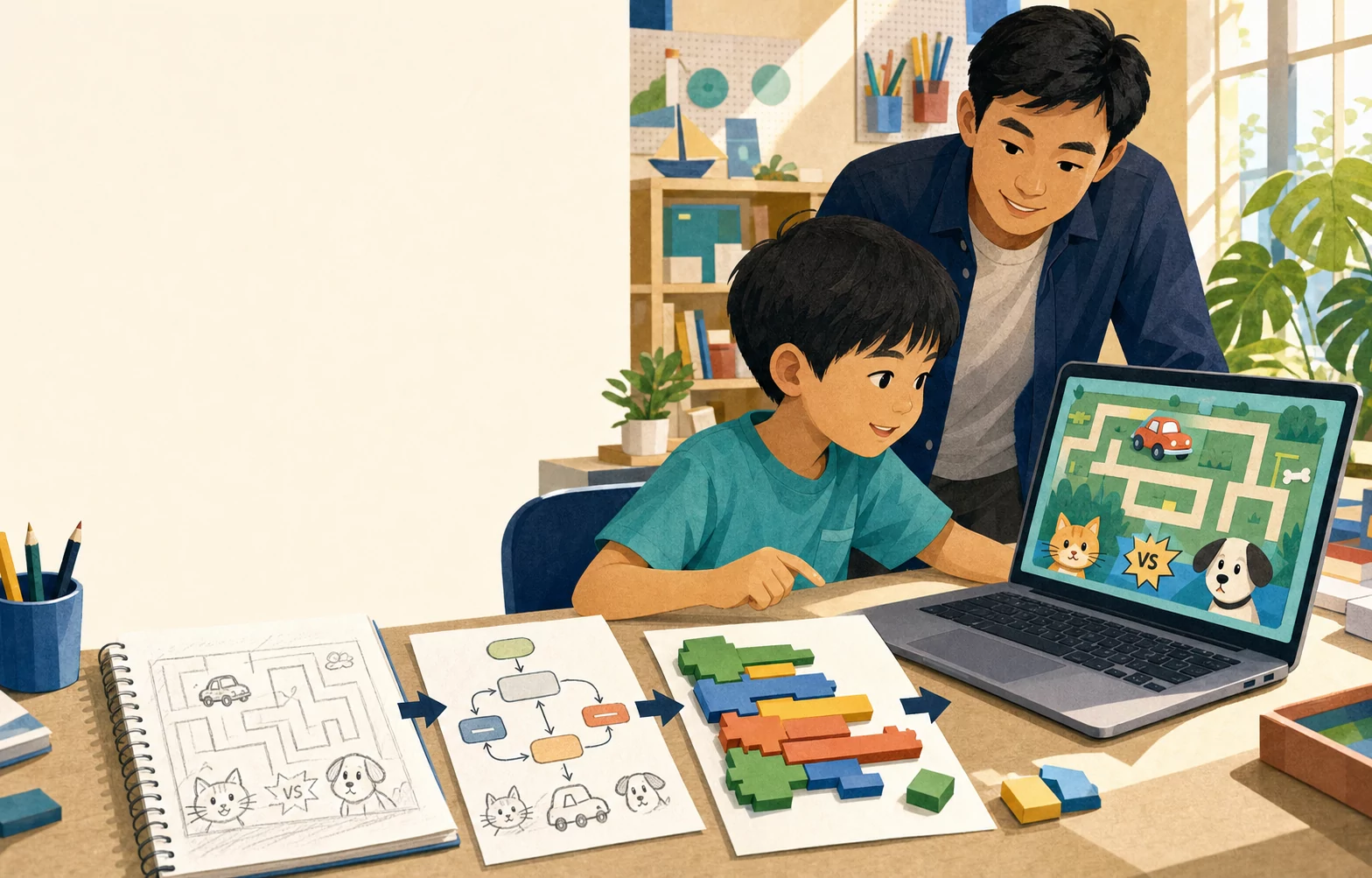
A trial lesson should answer more than “Did my child have fun?” It should help the family and instructor decide whether the course, language and pace make sense for this child now.
The free Coding with AI readiness trial at Siamese Cat Creative Club lasts 30 minutes. It is not a sales presentation disguised as a class, and children are not expected to arrive knowing how to code. The useful part is seeing how they handle one real problem.
The first few minutes establish how the child communicates
The instructor needs to learn how the child receives instructions and expresses an idea. Can they describe what they want a character or object to do? Do they ask when a word or step is unclear? Would a diagram make more sense than a long explanation?
For the English course, children should be able to follow ordinary English instructions, describe a simple idea and ask for help. Grammar is not being graded. Communication needs to be workable enough for the instructor and child to solve something together.
The child tries a real logic task
The trial includes a short task rather than a tour through finished projects. A beginner problem may involve choosing a goal, arranging instructions and running them to see what happens. If the result is wrong, the instructor can ask the child to compare the outcome with the plan.
This reveals more than a worksheet score. Some children immediately change several things at once. Others freeze because the first answer did not work. The instructor can slow the process down: identify the first point where the result changed, adjust one instruction, then test again.
The child does not need to finish everything. The point is to see whether this way of working is currently productive.
Readiness is not the same as being “good at computers”
Children who use tablets confidently may still be new to precise instructions and debugging. A child who rarely uses a computer may understand the logic quickly once the interface is explained.
The trial therefore looks beyond typing speed or familiarity with games. Relevant questions include:
- Can the child hold a simple goal in mind?
- Can they follow the effect of an instruction?
- Are they willing to inspect an unexpected result?
- Can they communicate when they are confused?
- Can they remain with the task long enough to benefit from guidance?
These are observations from one short meeting, not a permanent judgment about ability.
Parents should leave with a practical answer
After the task, the useful outcome is a recommendation: begin the 90-minute lessons, adjust the pace or language, or wait and try again later. A younger child may be ready; an older child may need a different format. That is why the course uses a real trial instead of relying only on an age label.
If the course is a fit, the full program contains 12 guided lessons. It moves from goals, sequences and conditions through loops, data, functions, interface planning, AI instructions, testing and presentation. Students work toward a first game or mini app rather than completing disconnected exercises.
Parents do not need to prepare a polished project idea for the trial. Bring the child ready to talk, try and change an answer. Thirty minutes is enough to learn whether the next ninety are likely to be worthwhile.